
Book Review:
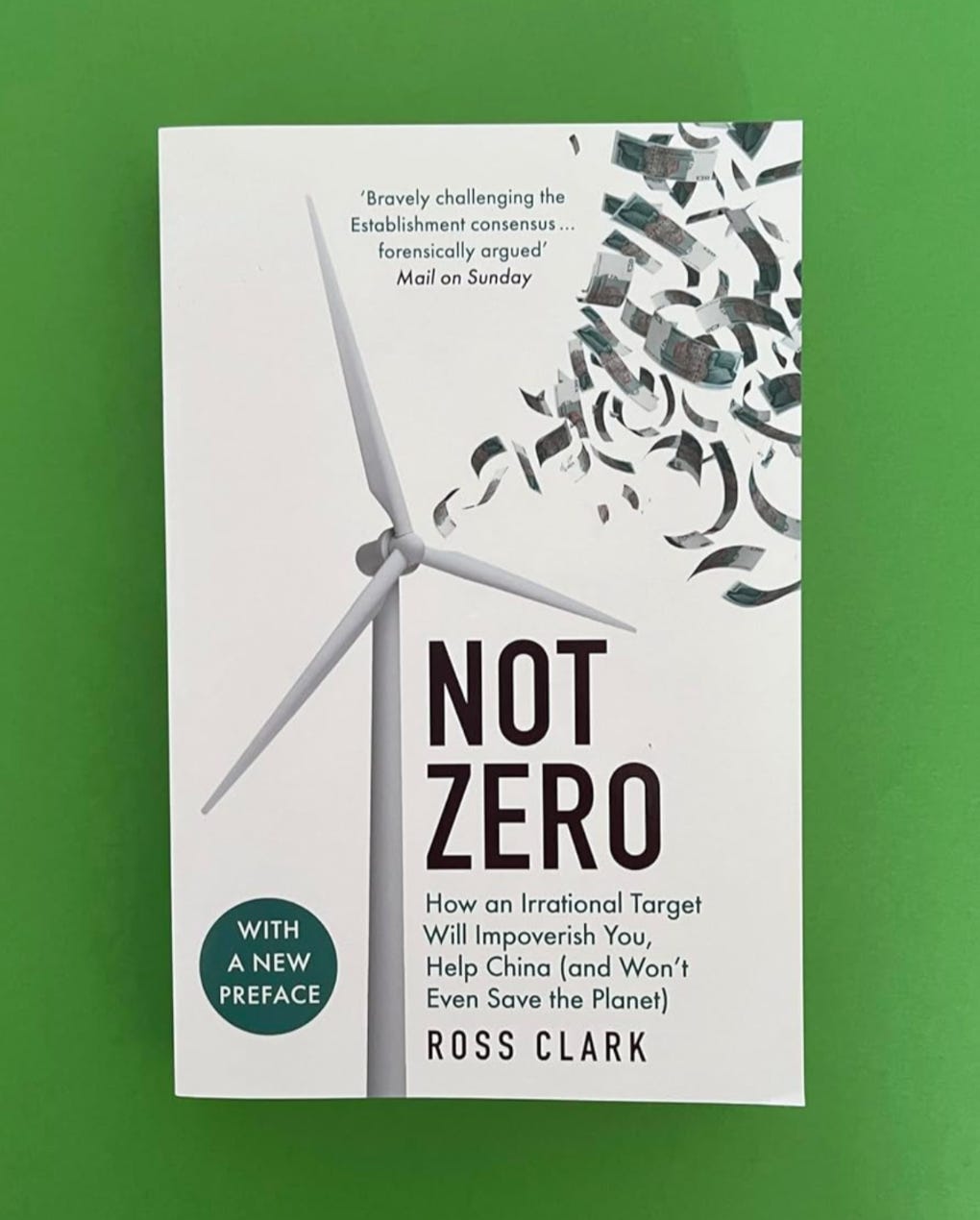
Not Zero by Ross Clark

How an Irrational Target Will Impoverish You, Help China (and Won’t Even Save the Planet)
This is a provocative yet timely book for anyone questioning the cost and fairness of current climate policies—particularly those of us living in rural areas who face the impact of wind farm development, grid infrastructure, and land use changes.
Ross Clark’s main argument is straightforward but controversial: the UK’s pledge to achieve Net Zero carbon emissions by 2050 is driven by politics, causes economic harm, and is environmentally ineffective. He questions whether the UK’s small share of global emissions justifies the significant sacrifices being asked of ordinary people.
For rural communities, Not Zero tackles several important issues. Clark highlights how the rush to build wind farms and solar arrays will significantly alter landscapes, yet provide few benefits to locals. He notes that while urban elites promote green transitions, it is often countryside residents who must live with the consequences—turbines, pylons, battery storage units, and habitat loss.
A recurring theme is the outsourcing of responsibility. The UK may seem to be reducing emissions on paper, but much of this is due to shifting industry abroad—to countries like China, where emissions are much higher and environmental standards are considerably lower. Meanwhile, China leads the market for the very technologies we’re told are crucial for reaching Net Zero: batteries, solar panels, and rare earth minerals.
Clark doesn’t deny that the climate is changing and does not argue for doing nothing. However, he warns against what he sees as a reckless and biased approach—one that burdens those least able to bear it, without clear evidence that it will significantly improve global outcomes.
The book is especially helpful for campaigners who feel drowned out by the Net Zero consensus. It provides data, political critique, and moral questions that are often ignored. Why is it acceptable to industrialise large areas of the countryside in the name of “green energy” with minimal public scrutiny? Why are communities pushed aside while developers receive subsidies?
Not Zero doesn’t provide all the answers, and its tone may not appeal to everyone. But it’s a valuable read for anyone wanting to question the current path and speak up for a more balanced, locally respectful approach to climate and energy policy.
In an age where debate is often shut down, Ross Clark’s book reminds us that scrutiny is not denial—and that genuine environmental protection must include protecting people, places, and democratic choices.
Available from Amazon and other independent booksellers
Excellent review. Thank you for a readable summary.
Annie,
Mr Clark writes a lot of sensible articles.
I would, however, be sceptical of just how much influence man can have on the climate, personally I think it is arrogant of man to believe that nature does have such little effect and man has sufficient to alter nature?